


A new paper in the Journal of Medical Ethics argues that the major harms of female genital mutilation (or FGM) do not come from the practices themselves, but from those who oppose those evil practices, painting anti-FGM efforts as a “heavily racialized and ethnocentric framework.
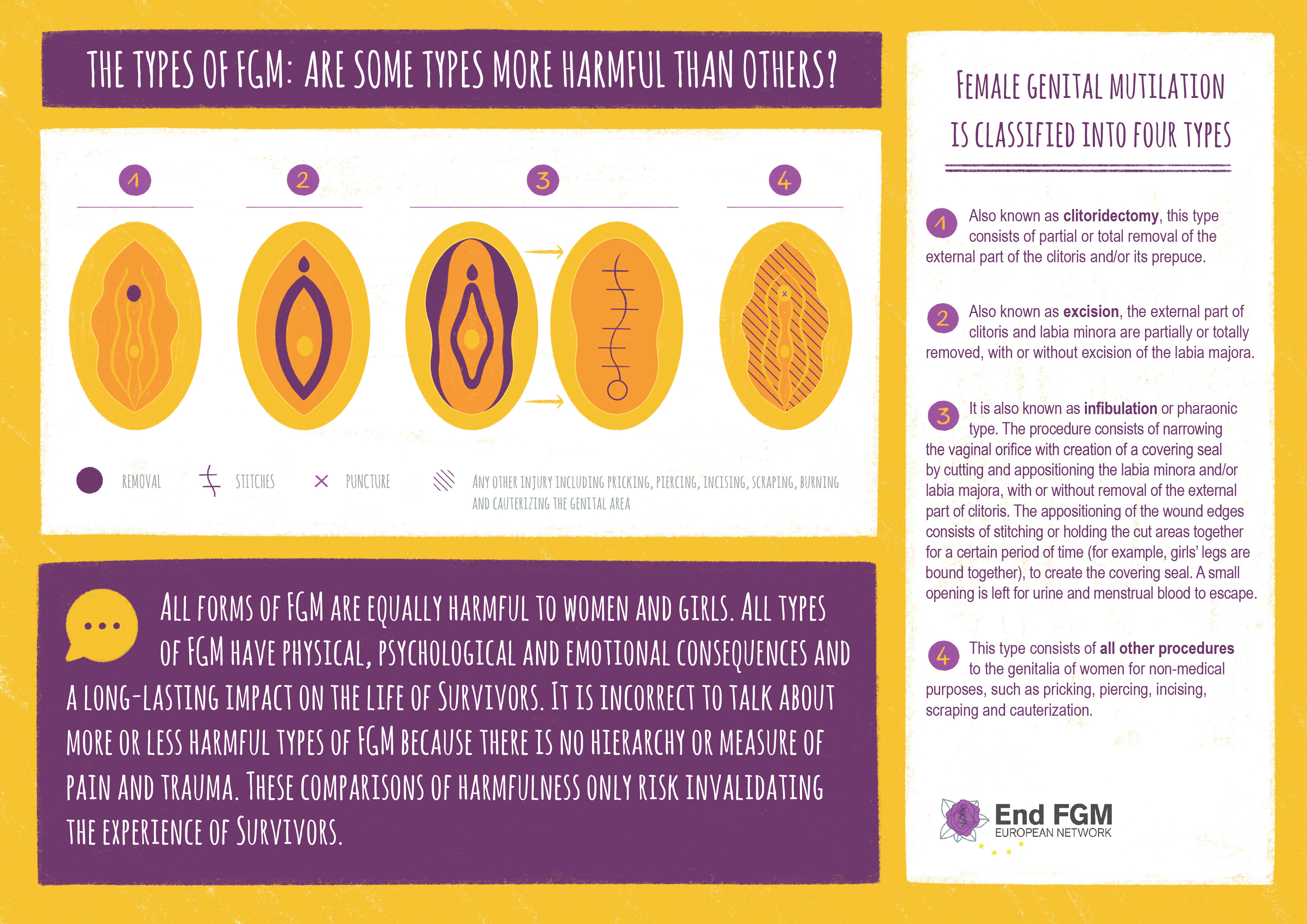
But female genital mutilation is not a harmless practice. It subjects girls, who are not old enough to consent, to the cutting and removal of parts of their genitals. This is done to enforce social conformity and control female sexuality under the pressure of tradition. This can range from removal of the clitoral hood to the entire removal of the clitoris and parts of the labia and even the sewing of the vaginal opening. Predominant in the Global South, such as Africa and the Middle East, FGM causes a multitude of lifelong physical and psychological harms
Throughout the paper, the authors ignore these harms and place blame on those fighting FGM, and in the process, employ six moral evils to justify the practice.
1 - The first moral evil arises when the paper uses cultural relativism to undermine universal protections for children.
In other words, if the culture accepts it, then it must be okay. For example, the authors describe how women who experienced FGM in the global south often report perceived social benefits, such as a feeling of heightened connection to one’s group, or that despite the pain, it was celebratory, exciting, and important. This conflates cultural endorsement of the practice with it being morally acceptable. But moral truths are not determined by whether a practice is culturally accepted. For example, many cultures in the Islamic world often support and enforce the killing of gay people. But that does not make it morally permissible. Cultural acceptance can explain why a harm persists, but it cannot morally justify inflicting harm.
2 - Minimizes harms through selective skepticism.
The authors repeatedly question claims of trauma or sexual harm caused by FGM, but do not apply equivalent skepticism to the self-reported claims of empowerment or aesthetic benefit. For example, the authors write that “most affected women themselves rarely used the word trauma to describe [FGM],” and instead, “describe it as celebratory, empowering, important, and significant.” Why are positive statements of FGM unquestionably accepted, while negative statements are heavily critiqued? Skepticism that only flows in one moral direction is advocacy disguised as neutrality.
3 - Dismisses psychological trauma as socially constructed.
The paper argues that trauma around FGM is culturally constructed through Western PTSD frameworks and that the main cause of distress is due to anti-FGM narratives. For example, the authors write, “[The PTSD framework] applies Western cultural understandings to people who do not necessarily equate the experience of pain as directly causing trauma.” And that the “current global anti-FGM discourse is replete with potentially trauma-inducing effects.” This argument creates a chilling implication: suffering only “counts” if it fits culturally approved interpretations. This is ethically dangerous, because it selectively disqualifies victims whose suffering complicates a political narrative.
4 – Morally inverts responsibility.
The paper emphasizes supposed harms caused by anti-FGM discourse while minimizing the moral evil of the practice itself. For example, the authors write, “What is almost entirely absent from the public conversation on ‘FGM’ is discussion of the ways in which the dominant discourse on ‘FGM’ can itself be damaging to the health and well-being of those within associated communities.” But we can oppose stigma against victims while also opposing the practice. The paper fails to uphold both truths and instead shifts moral weight away from FGM and toward those who object to it.
5 – Frames opposition to FGM as racist.
The paper claims that strong opposition to FGM is motivated by Western-centered morality that reinforces colonial power on the Global South. For example, “Campaigns against ‘FGM’ are nested within neocolonial development frameworks that construct African or South Asian women’s female genital practices as barbaric and primitive.” But these practices are barbaric. The evil of permanently injuring a child’s body does not depend on geography, race, or historical power. Portraying moral concern for children as colonial power dynamics deflects blame on those opposed to FGM rather than the practice itself. This avoids answering the fundamental ethical question.
6 – Erases the child as an individual with rights.
Throughout the paper, the authors emphasize the importance of the community, of the culture, of the traditions, of the adults’ opinions, but nowhere are the child’s needs discussed. For example, “One’s body may be perceived as belonging to a larger group rather than being subject to individual choices and preferences,” creating a “strong sense of identity” and that FGM can create “heightened connection to one’s group.” But nowhere does the paper ask the most basic ethical question: what does this do to the child’s future body, sexual health, and autonomy? Here, the child is treated as an object to be used for the culture, not as an individual with rights nor as a person in need of protection.
While the paper claims to call for balance and evidence-based discourse, the analysis shows a consistent pattern:
It presents no data on the harms of FGM
Consistently minimizes bodily harm
Conflates cultural acceptance with moral value
Gaslights victims by claiming their trauma is caused by Western racism, not the practice itself.
Therefore, FGM defenders shift moral responsibility away from the practice and onto those who condemn it.
Female genital mutilation is not a cosmetic alteration. It is the irreversible mutilation of a girl’s body. Calling it anything else does not make it less barbaric. And while we should always be open to improving how laws are enforced and how victims are treated, none of that changes the central moral evil of FGM. No amount of cultural meaning, identity affirmation, or political caution can make the practice morally permissible.
If you want to learn more about the detailed physical and psychological harms of FGM, see the scientific sources below.
And if you’d like to support our work of restoring reality to science education, please consider donating at theparadoxinstitute.org. Your contribution funds the production and distribution of our educational media.
Scientific sources
Sarayloo, K., Latifnejad Roudsari, R., & Elhadi, A. (2019). Health consequences of female genital mutilation: A systematic review. Galen Medical Journal, 8, e1336.
Klein, E., Helzner, E., Shayowitz, M., Kohlhoff, S., & Smith-Norowitz, T. A. (2018). Female genital mutilation: Health consequences and complications—A short literature review. Obstetrics and Gynecology International, 2018, Article 7365715.
Reisel, D., & Creighton, S. M. (2015). Long-term health consequences of female genital mutilation (FGM). Maturitas, 80(1), 48–51.
Mpinga, E. K., Macias, A., Hasselgård-Rowe, J., Kandala, N.-B., Félicien, T. K., Verloo, H., Bukonda, N. K. Z., & Chastonay, P. (2016). Female genital mutilation: A systematic review of research on its economic and social impacts across four decades. Global Health Action, 9, 31489.
Thank you for addressing this. FGM is indefensible.
Astonishing. However, actions speak louder than words - all those involved should undergo FGM and emasculation and report back.
Otherwise it’s all talk.